
Author: Andrei Mihail (Romania) writes about opening doors to a richer, fuller life for people living with dementia
Dementia care often centers around medication and structured indoor activities. We find solace in the familiar and known—art therapy sessions, cozy living rooms, and melodic tunes from yesteryears. But while these indoor sanctuaries have their unique and vital roles, we’re overlooking an immense reservoir of well-being that’s been with us since the dawn of humanity itself: the great outdoors. The cycles of day and night, the melody of seasons, and even the intricate patterns of a leaf have inspired not only works of art but entire cultures and mythologies, and time in nature can help anyone find meaning and joy in their life.
While researching the links between dementia and nature, what struck me as particularly interesting was a study by Natural England which revealed an eye-opening discrepancy between how people with dementia and their caregivers perceive nature’s accessibility. Just 20% of people living with dementia felt their condition was a barrier to enjoying nature, but a surprising 80% of caregivers thought the opposite. This perception gap could unintentionally rob our loved ones of an enriching experience they not only can handle but truly enjoy. By giving them back agency and expanding their boundaries, we’re opening doors to a richer, fuller life.
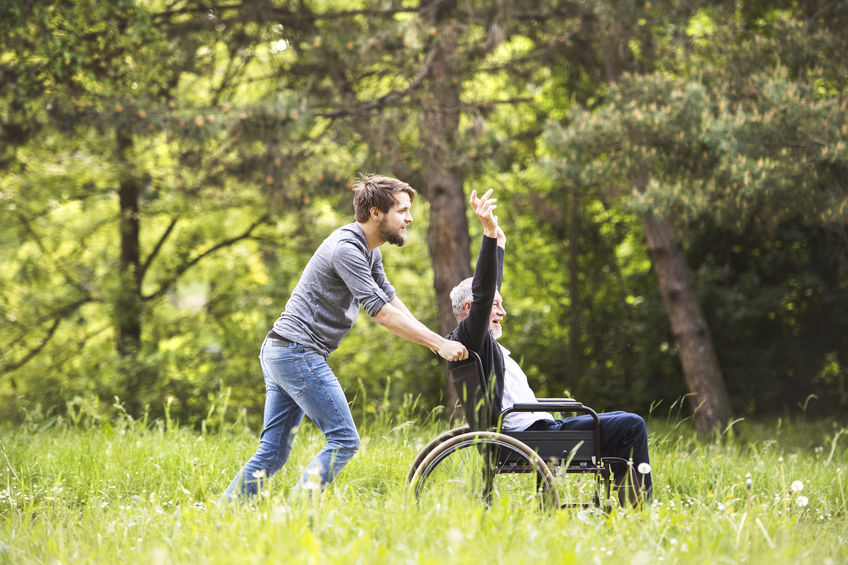
Father and son joyfully connecting with nature and with each other
Nature is more than a picturesque setting; it’s a vessel for holistic enrichment. When made accessible and safe, stepping outside becomes more than just fresh air. It’s a walk through a living gallery of sensations, from the texture of a petal to the smell of fresh soil after rain. For someone living with dementia, these sensory-rich experiences not only help cognitive function but also offer a meaningful respite from the four walls that often confine them.
Engaging with nature doesn’t just capture the eyes; it captures the heart. As you walk along familiar or newly-discovered paths, every step taken is like a word written in the storybook of life. Each outing becomes an emotionally charged journey, perhaps sparking long-forgotten memories or birthing new, joyful moments that enrich the soul.
When we immerse ourselves in the natural world, the experience envelopes us in a blanket of serenity that touches us on all levels—physical, emotional, and spiritual. Activities such as guided walks, nature photography, gardening or birdwatching provide us with a feeling of achievement and foster mindfulness, encouraging people to not just look at nature, but perceive it, search for details.
There’s something almost meditative about listening to a babbling brook or feeling the wind softly caress your face. And the experience doesn’t have to be solitary. Sharing these moments with a loved one struggling with dementia doesn’t just stimulate their cognition; it nurtures social bonds, knitting together the social fabric that dementia often wears thin.
Nature, perhaps, is the world’s most ancient and versatile artist, offering a palette of experiences that are both grandiose and subtle, intricate and straightforward. It’s a stage of life that evolves, much like the ever-changing needs and capabilities of those living with dementia. Fostering a relationship with nature could turn this challenging chapter into one filled not with just trials but also boundless joy and meaningful connections. From a session of outdoor painting to enjoying a cup of cocoa on your porch, there are countless ways to bring a little more nature into your life.
If you’re searching for a way to bring a little extra happiness and fulfilment into the life of someone grappling with dementia, remember that sometimes the most profound joys are just a step outside the front door. Whether it’s a tranquil stroll through a garden, a quiet moment watching the sun dip below the horizon, or just a few minutes of inhaling the crisp, clean air, nature offers a universal canvas for creating cherished moments and lasting memories.
Author:
Andrei Mihail is a freelance writer and biologist from Romania, now based in the UK. With a deep love for the natural world, he writes about the intersection of nature, science, and well-being. He feels a personal connection to dementia advocacy through his grandmother.
Leave A Comment