

Life’s beauty often hides in the simplest things—a warm smile, a beautiful piece of music, a bouquet, or even a phrase that speaks to the heart. These small yet profound moments can uplift us, especially during challenging times.
For caregivers, who shoulder immense emotional and physical demands, these ordinary sources of beauty can provide essential respite and renewal.
But how can something as simple as flowers or inspiring words make a difference in caregiving? Let’s explore how small, mindful rituals can transform caregiving spaces and foster emotional and mental well-being for caregivers and those in their care.
The Healing Power of Flowers
Flowers have long been symbols of care, hope, and renewal. Beyond their aesthetic charm, they offer significant emotional benefits. Research shows that engaging with natural gifts, such as flowers, helps reduce stress, promote calmness, and create a sense of connection to the present moment. Their vibrant colors and delicate fragrances stimulate the senses, offering physical and emotional relief.This emotional response to flowers is deeply rooted in the brain’s neural pathways. Studies on awe and beauty reveal that engaging with nature—whether through a garden, a bouquet, or even an image of flowers—activates regions in the brain associated with emotional regulation and stress reduction.
For caregivers, who often provide care in high-stress environments, this connection to nature can create a much-needed sense of grounding.
Imagine walking into a caregiving space filled with fresh flowers. The atmosphere feels lighter and more serene. Such small changes can transform a room, making it feel less clinical and more welcoming for both caregivers and care recipients. It’s a reminder that beauty, even in its simplest form, can have a profound effect.
Dr. Andrew Weil, a leader in holistic well-being, accentuates this idea. He recommends keeping fresh flowers in the home, not as mere decoration, but as an approach for grounding oneself in the present and fostering emotional resilience.
Flowers, then, become more than just a visual delight—they are an act of care and mindfulness.
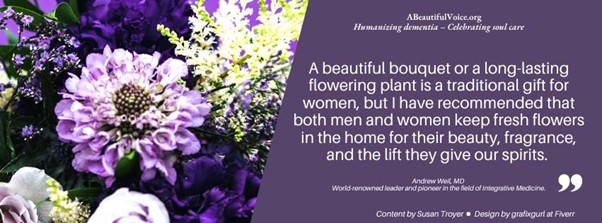
Dr. Andrew Weil, MD, world-renowned leader and pioneer in Integrative Medicine
The Power of Inspirational Quotes for Emotional Resilience
While flowers enhance the physical environment, inspiring words uplift the inner world. A thoughtfully chosen phrase, a poem, the lyrics of a beautiful song – or a meaningful quote can provide clarity and encouragement, especially during difficult times.
But how do simple words carry so much weight? Research shows that positive affirmations and visual cues can reinforce neural pathways associated with optimism and focus.
When caregivers are consistently exposed to uplifting messages—whether displayed on a wall, written in a journal, or placed on a bedside table—it can help them navigate challenging days with renewed perspective.
This small reminder of strength and resilience helps caregivers reconnect with their purpose and maintain perspective.

Christian Cooper, Science writer and editor
For example, pairing inspiring words with the comforting presence of flowers creates a dual effect. The physical beauty of flowers soothes the senses, while meaningful words encourage emotional strength. Together, they create a balanced and nurturing environment that supports both caregivers and care recipients.
When combined with the presence of flowers, the words of encouragement create a holistic atmosphere of care.
Together, they strengthen the spirit, making both caregivers and those they support feel valued.
Why Pure Beauty Matters in Caregiving
In caregiving, physical needs often overshadow emotional well-being. However, fostering a positive and nurturing environment benefits everyone involved. Small rituals, like incorporating flowers and inspiring words into daily routines, are simple yet transformative.
These practices serve as acts of care. Neuroscience research highlights how repeated exposure to uplifting stimuli can rewire the brain to prioritize positivity and resilience. By consciously integrating beauty and encouragement into their surroundings, caregivers not only improve their own mental health but also create a ripple effect of positivity for those they support.
In this context, beauty becomes more than a luxury—it is a necessity. Flowers and inspiring words offer caregivers tangible ways to reclaim a sense of control, peace, and purpose in their demanding roles.

Dr. Andrew Weil, MD, world-renowned leader and pioneer in Integrative Medicine
Creating Beauty in Everyday Moments
Caregiving is one of life’s most demanding roles. Yet it offers opportunities to create meaningful connections and moments of beauty. By embracing small, intentional rituals—such as placing fresh flowers in a room or focusing on uplifting words—caregivers can transform their environments into spaces of renewal and peace.
These practices go beyond self-care. They represent a shift toward a culture of compassion and mindfulness in caregiving, where emotional well-being is just as important as physical health.
At A Beautiful Voice, we celebrate these ideas with resources designed to inspire and uplift. Our floral quote collection and mindfulness approaches serve as gentle reminders of the hope, resilience, and beauty that exist on even the most challenging days – and in one of life’s most demanding roles.
Take action today: Surround yourself with flowers and inspiring words. Explore the resources at A Beautiful Voice to discover how these small gestures can brighten your caregiving journey. Even in the most ordinary days, beauty is there to be found—and shared. 
Blog Co-Author:

Zulekha Ali (“Zuley”) is a freelance writer with a commitment to delivering informative and impactful content to enrich readers’ understanding and empower them to make informed decisions.
Blog Co-Author:

Susan Troyer, MS, BA, is author and curator of ABeautifulVoice.org
Member:

Leave A Comment