
🌱 What Makes 365 Ways to Say I Care Different
Most resources about dementia focus on decline — and too often, they begin at the end.
365 Ways to Say I Care was created to do something different.
This living directory is built on a simple but radical truth:
Life is not over at the time of diagnosis.
People living with dementia remain individuals with strengths, preferences, creativity, agency, and the capacity for joy — often for many years. Care, therefore, must be responsive not only to loss, but to everything that remains, adapts, and continues to matter.
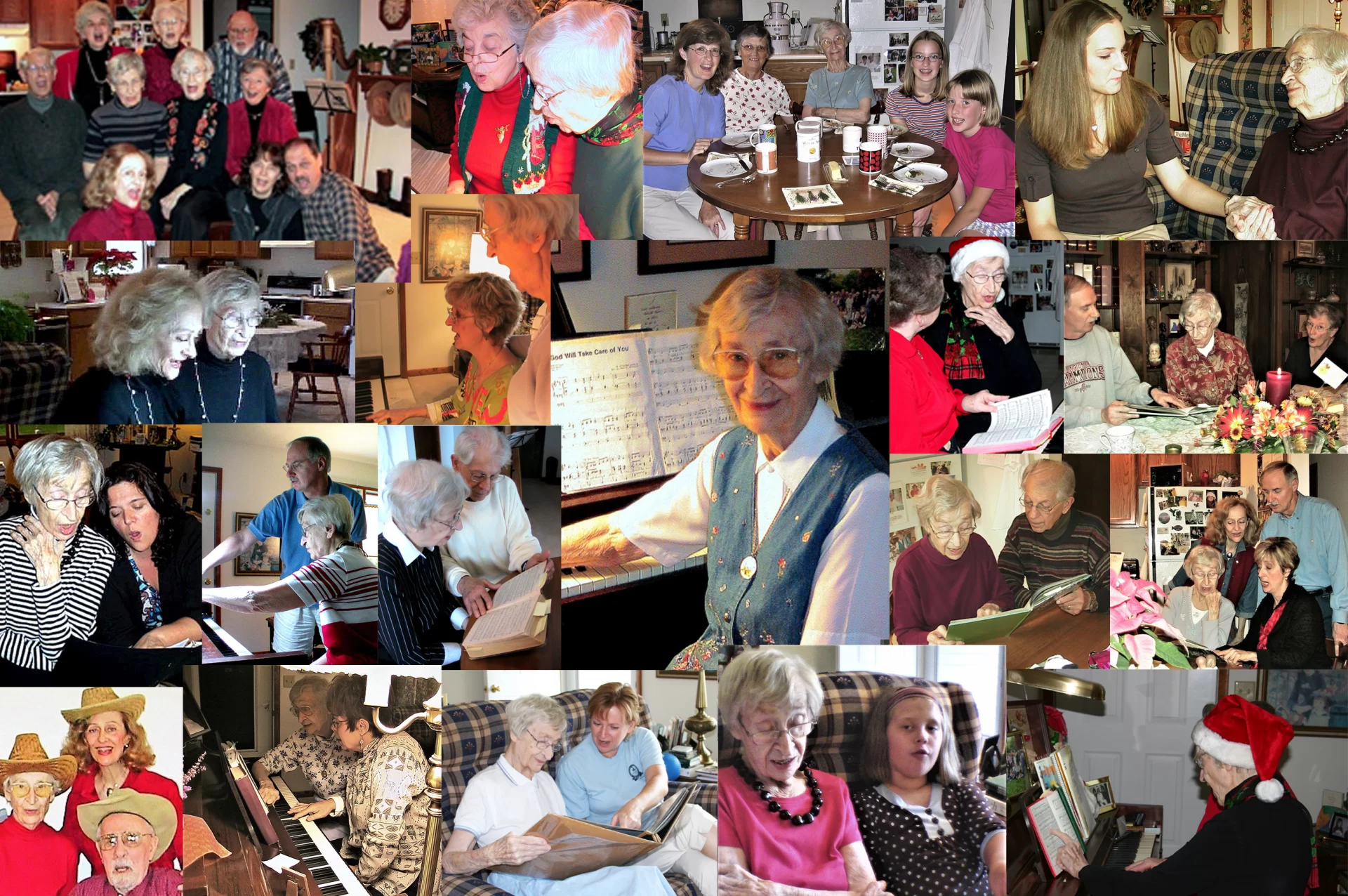
“A friend hears the song in my heart and sings it to me when my memory fails.” (Author unknown)
🌿 How this series is organized
Each entry in 365 Ways to Say I Care is presented in a clear, directory-style format, so caregivers — often busy and sometimes overwhelmed as I was — can quickly understand the idea at a glance.
Each “Way” is written with early-stage and middle-stage dementia in mind first, emphasizing:
- Abilities rather than deficits
- Participation rather than passivity
- Relationship rather than rescue
Below each entry, readers may also find an optional free-form section that explores:
- How the same “Way” can be modified as dementia progresses
- Reflections from lived caregiving experience
- Personal observations, photos, or stories where appropriate
This structure allows care to evolve without erasing personhood.

Two former teachers reading together – our dear Uncle Max with his oldest sibling – Miss Ethel.
 Why stages matter – but don’t define the person
 Why stages matter – but don’t define the person
For clarity, this series uses the Alzheimer’s Association’s simplified three-stage framework: Early-stage (mild), Middle-stage (moderate), Late-stage (severe).
The purpose of staging here is not to label, but to prevent a common and harmful shortcut: jumping directly from diagnosis to late-stage imagery.
When we do that, we unintentionally reinforce fear, stigma, and social withdrawal — precisely when connection, support, and possibility matter most.
🌻 The heart of this project
At its core, 365 Ways to Say I Care exists to:
- Honor caregivers without reducing care to crisis-only moments
- Affirm that there is life beyond diagnosis
- Encourage support systems that make it possible to live more fully
- Reimagine dementia tragedy narratives as vibrant, authentic, and joy-filled narratives
Care is not only what we offer at the end of life.
Care is how we walk with one another — day by day, season by season.
This project is an invitation to do exactly that.
Author:

Susan Troyer
Website Author & Curator and Member:

Leave A Comment