
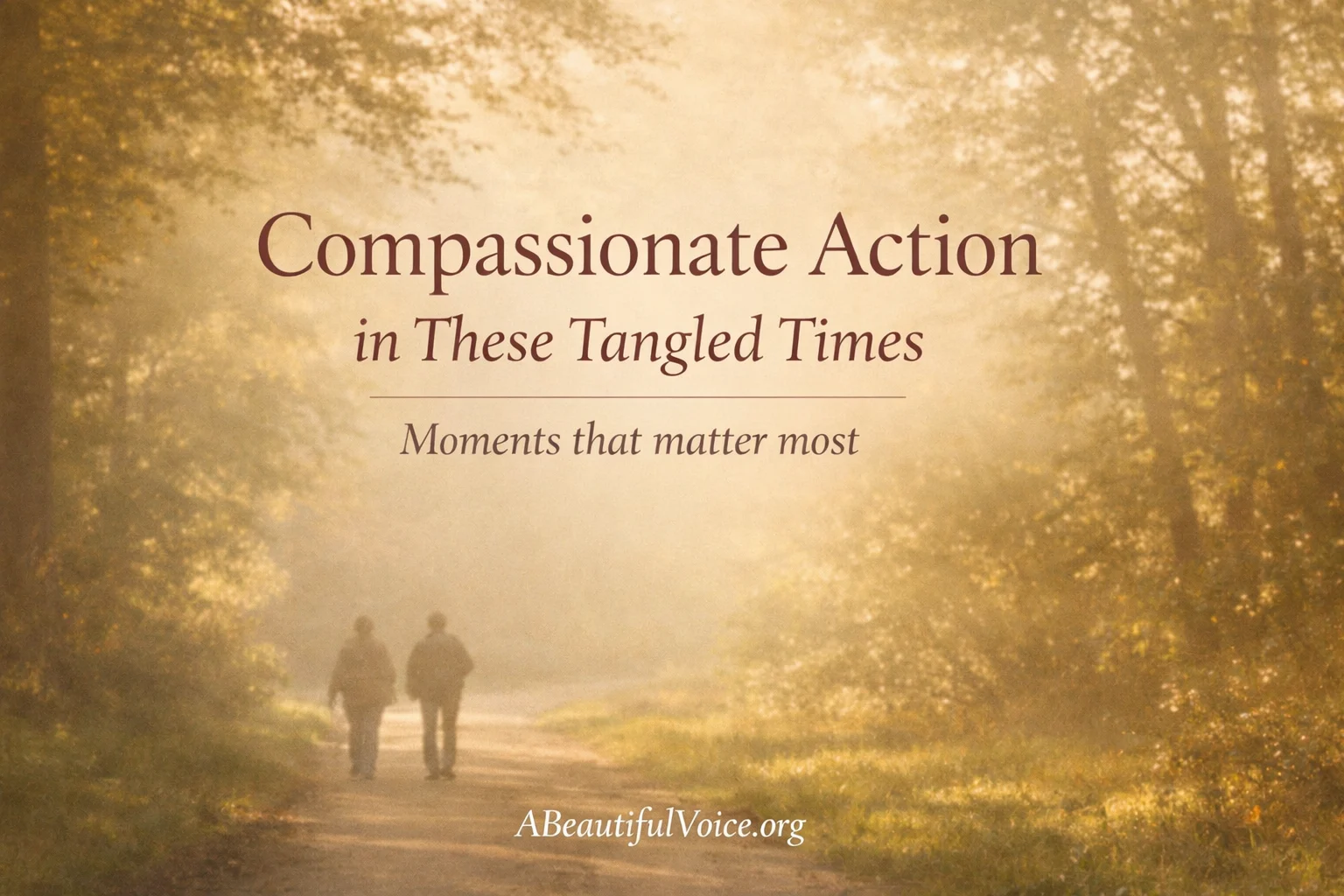
What happens when people stop showing up?
A question posed recently by caregiver and culture change leader Neal Shah stopped me in my tracks:
“What happens to your brain when the people you’ve always had around you stop showing up? We’re engineering loneliness into the end of life and then blaming Alzheimer’s.”
This is not only an alarming caregiving question. It is a human one—and increasingly, a public health one.
I was reminded of this while reflecting on an upcoming program from Upaya Zen Center in Santa Fe featuring peacebuilder John Paul Lederach, whose work has influenced leaders such as former U.S. Surgeon General Vivek Murthy. Murthy has spoken about loneliness as a profound form of invisibility—something that erodes our sense of being seen, known, and valued. Lederach’s work in peacebuilding offers a powerful parallel: when we show up with presence and genuine care, we begin to restore what has been lost.
For those living with dementia, this is not abstract.
It is felt in the long, unstructured hours—the moments outside the formal systems of care. Not during scheduled visits, but in the quiet gaps: the 3-day holiday weekends, the unscripted days, the times when no one calls and no one comes. These are the moments when loneliness, helplessness, and boredom take hold—not as theories, but as lived experience.
Compassion, then, may not begin with grand gestures. It may begin with a different question:
When is presence most needed?
And perhaps just as importantly:
Are we willing to show up then—even when it’s not convenient?
In my own caregiving journey, I learned that one of the most meaningful things we can do is simply ask:
“When would it matter most if I came?”
That question alone can begin to rehumanize what isolation has quietly taken away.
Lederach offers a gentle guide for navigating these moments:
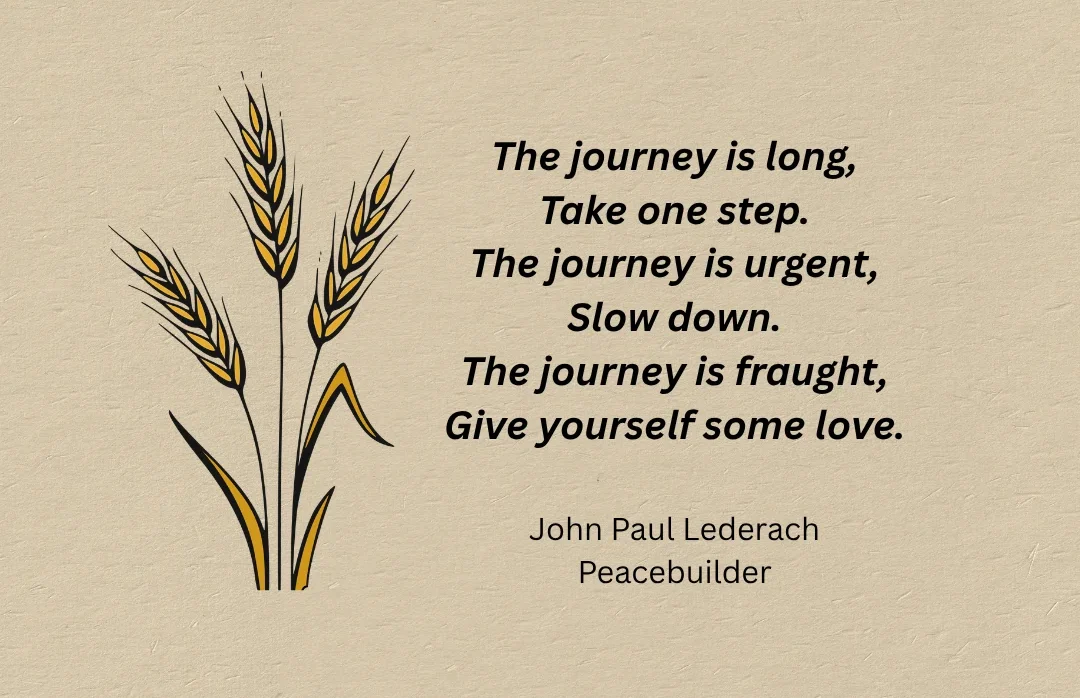
We talk a lot about connection. In these tangled times, perhaps compassion is not something abstract or distant. Perhaps it begins right here – with presence, with timing, and with the willingness to truly see one another.
For those interested, this reflection was inspired by an upcoming program with John Paul Lederach through Upaya Zen Center. It’s a meaningful exploration of compassion in complex times – something that feels especially relevant right now.
You can learn more here:
https://www.upaya.org/program/the-measure-of-our-humanity-john-paul-lederach-online-april-12-2026/
Program reference:
Compassionate Action in These Tangled Times
Online with John Paul Lederach — April 12, 2026 (Upaya Zen Center)
Author:
Susan Troyer
Website Author & Curator
Member:
Leave A Comment