
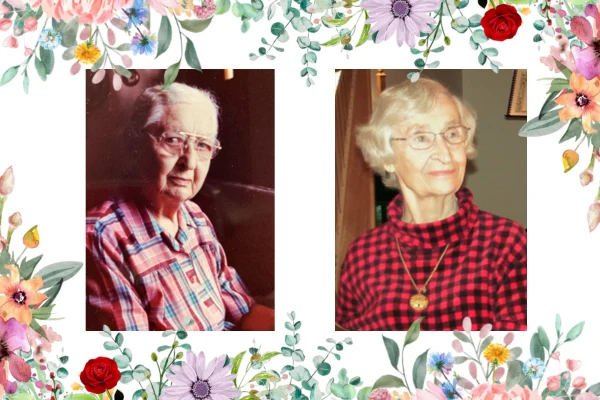
A tribute to my mother and grandmother
The following vignette was written in 2024 when Goshen College invited alumni to contribute memories for an Oral History Project.
I never submitted it, nor have I previously published it. But now, in May of 2026, I find myself returning to these memories with renewed gratitude and tenderness.
This piece is offered as a tribute to two remarkable women — my grandmother and my mother — both alumni of Goshen College, both enduring influences in my life. In memory, they remain among the role models who have most influenced me.
Over the past several years, while navigating every imaginable challenge involved in building and rebuilding a website devoted to caregiving, dignity, and soul care, I have often found myself thinking about the people who shaped me most deeply. Repeatedly, I return to the same sources of strength: individuals whose quiet perseverance, moral clarity, humor, faith, and resilience continue to guide me long after their passing.
This vignette begins a series of reflections honoring some of those enduring influences as I — together with fellow members of the Class of 1966 — move through our eighth decade of life.
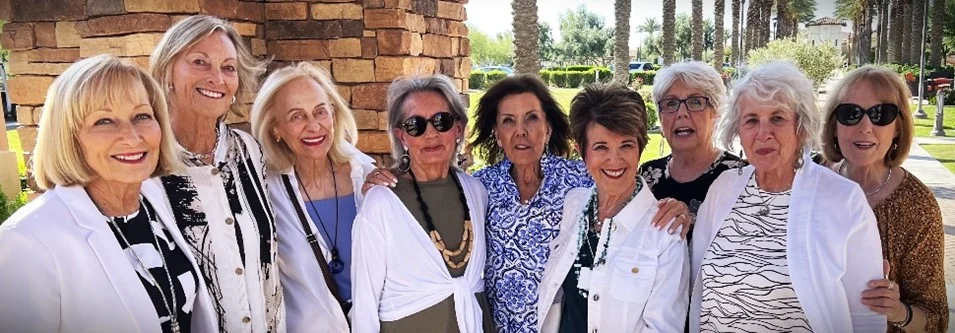
A 2024 reunion with friends from Goshen College Class of 1966 celebrating our 8th decade
At the very center of that circle stand two women whose lives of service left an indelible mark on my life: my grandmother, Carrie Good Yordy, and my mother, Ethel Yordy Troyer.
As I reflect on their lives, I am reminded of the words of the poet Rainer Maria Rilke — words that seem to echo not only their resilience, but also the spirit with which they moved through hardship, beauty, loss, work, and love.
“Let everything happen to you: beauty and sorrow.
Just keep going. No feeling is final.”
This adaptation of the poet’s words has stayed with me. And so have they.
Grandma Carrie – a lifetime of supporting and nurturing others
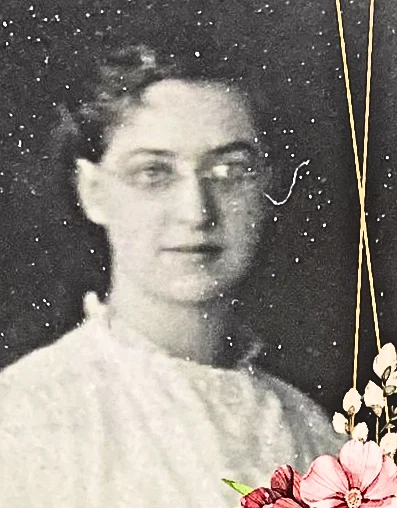 The oldest of nine children, she was packed and ready to leave for Goshen College – my alma mater – when one of her eight siblings protested that her departure was unfair because there was so much work to be done. She quietly unpacked and stayed home but, later, attended a short term of study at Goshen College.
Years later, as the pastor’s wife of a large rural church, she managed and operated the farm which she was given by her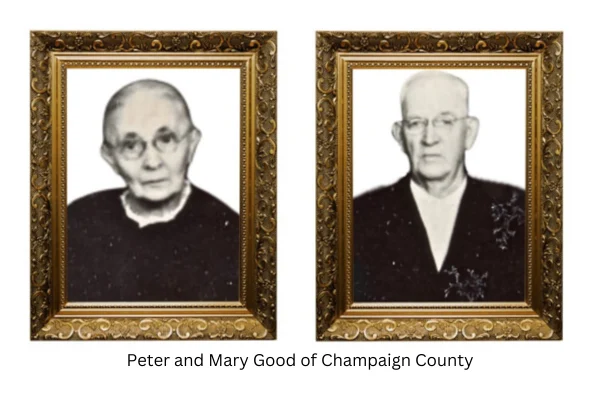 parents. She was one of nine siblings to each receive an 80-acre farm from their industrious, diligent, and untiring parents – my maternal great grandparents, Peter and Mary Good of Champaign County, Illinois.
While she was tending the farm, my grandfather Ezra – Carrie’s husband – traveled the unpaved roads of the state of Illinois as a minister for the Mennonite Church. I recall my mother saying that he was called upon by congregations throughout the state not only to fill the pulpit, but also to help resolve conflict within the church.
And I recall hearing Grandpa’s stories about what could go wrong while driving the early automobiles on unpaved roads during those years.
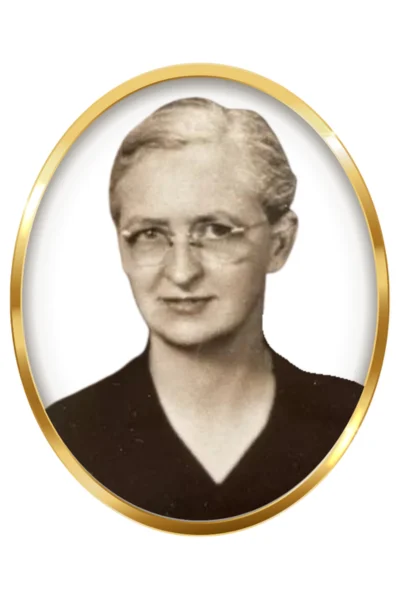
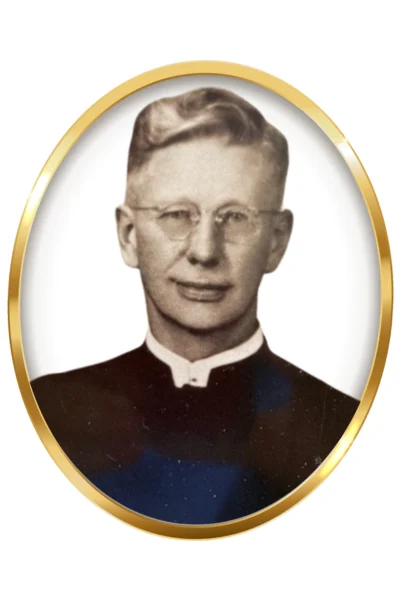 Together they raised six children during The Great Depression years of 1929-1939
She milked the cows, tended farm animals, gardened, cooked, baked, churned butter, cleaned, laundered, sewed, and frequently served meals to house guests at a long, extended table.
She also nursed my grandfather through his recovery following his leg amputation. The surgery was required due to an injury suffered in his teens when he was dragged while training a horse. Years later, as the surgery was finally being scheduled, the physician was overheard to say that he thought it was “too late.”
During these challenging times, she sent her oldest daughter, my mother, to a private college in Indiana – Goshen College.
The mystery and the history found in my mother’s cedar chest
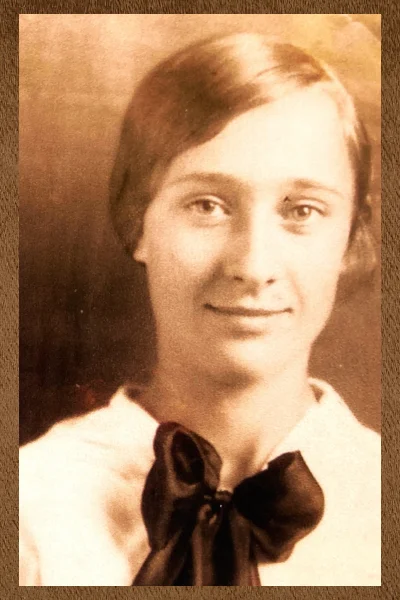 From my early years, I was intrigued by the diaries which Mother kept in her cedar chest. Written in her college years, her diaries and poetry collection later influenced my attempts at “journaling” and writing poetry beginning in the third grade.
Also found in the cedar chest were the GC yearbooks. As a student, she sang with the touring choir, became a member of the Audubon Club, and received a letter as a Maple Leaf athlete. She described herself to me on several occasions as a “tall basketball player” – being tall, perhaps, by the standards of earlier years.
Following two years of enrollment at Goshen in the late 1930’s, she qualified for a teaching certificate, leading to a career in classroom teaching. Later, she completed a four-year degree at a college located less than two miles from our farmhouse and best-known for its most famous alum, President Ronald Reagan.
As a child, I was so proud of her athleticism – and how adept, graceful, and strong she was about everything she did!
- She could slug a baseball at a family reunion with an all-male field of players. Not missing a beat, she would turn to put out her signature cherry pie for the reunion meal.
- She could drive the tractor for Dad when he was short of help – then pull up to the house and put out a full farm menu for a dozen summer helpers at our extended table.
- She looked statuesque and professional dressed in a navy blue suit and navy pumps – when departing with Dad for IAA meetings (Illinois Agricultural Association) in Chicago.
Culture for Service
But as a child uncovering the treasures in her cedar chest, I didn’t totally grasp the college motto, “Culture for Service.” I just knew the significance of this motto involving “culture” had to be a pretty good thing. Why? It was during the depression years that my diligent, industrious grandmother sent her oldest daughter away to a private college. I held everything found in the cedar chest which was related to Goshen College with a sense of reverence.
The English poet, Matthew Arnold, eloquently summed up the feeling created when I delved into the contents found in the cedar chest. It was a feeling which I did not have words to describe:
“Culture, the acquainting ourselves with the best that has been known and said in the world, and thus with the history of the human spirit.”
Grandma’s house – a living sanctuary
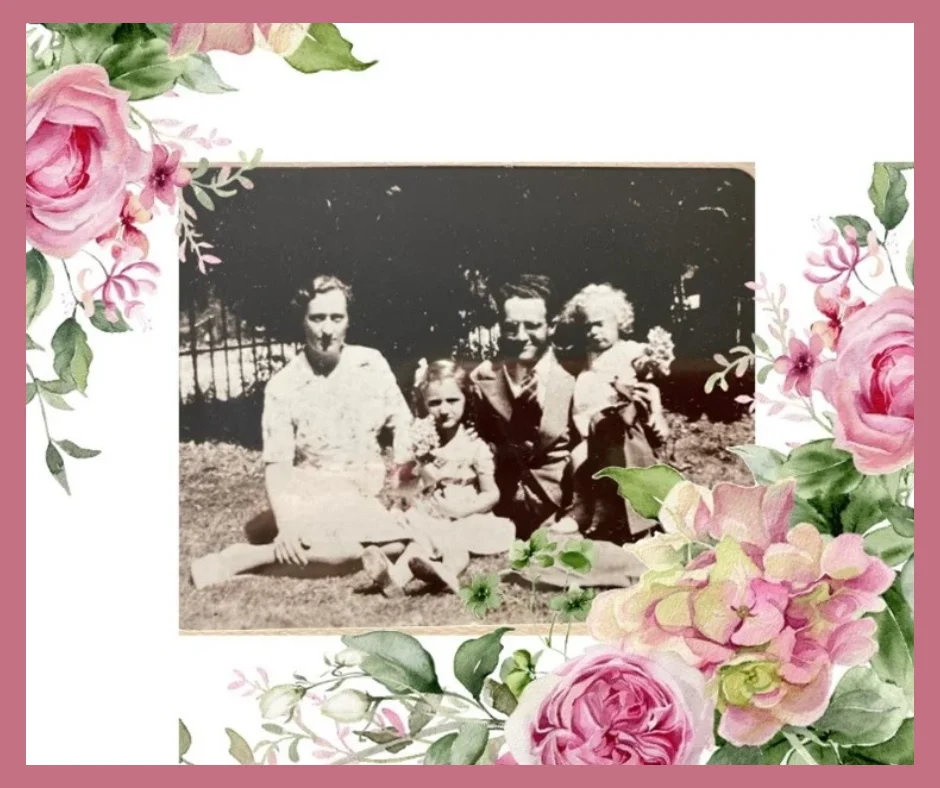
Dad, Mother, Mary Ann, Susan after Sunday dinner at Grandma’s extended table
It was here, in this peaceful haven, that her Victorian farmhouse became my ultimate classroom. Being there sometimes meant being seated at an extended dining room table with a visiting speaker from a far-off land. Grandma’s role as host included serving visiting ministers, church leaders, church workers who were home from overseas on furlough – and even some college presidents over the years.
My family lived close-by on an adjacent farm, and my parents were, on occasion, invited to assist as hosts. Being the second oldest granddaughter, I was included at the extended table of relatives and guests. As Grandma’s family grew, I would later be seated with cousins at tables in the adjoining room.
But at this young age, Aunt Dorothy would elevate me at the table by seating me on both the old Wards and Sears catalogues.
For me as a preschooler, this exposure to meeting people from other cultures left a significant impact, as I witnessed my grandfather easily engaging with guests over a meal.

Ever Singing!
Grandma serving a meal to the Goshen College choir arriving by coach bus – did I dream this?
As a preschooler, I recall being wide-eyed when a coach bus carrying Goshen College choir members pulled into Grandma’s circular drive. The students disembarked to line up at the kitchen door for their Sunday evening meal which preceded their performance at our church in the country. My mother and some of her siblings assisted in serving the meal.
Could I possibly have dreamed this…? I wondered as an adult. I was fortunate to be able to confirm with Aunt Dorothy in her later years that this memory was accurate. “Yes!” she said immediately, appearing pleased about this recollection… “Aunt D” then filled in the details.
Grandma’s kitchen – drying the communion cups following a Sunday evening service
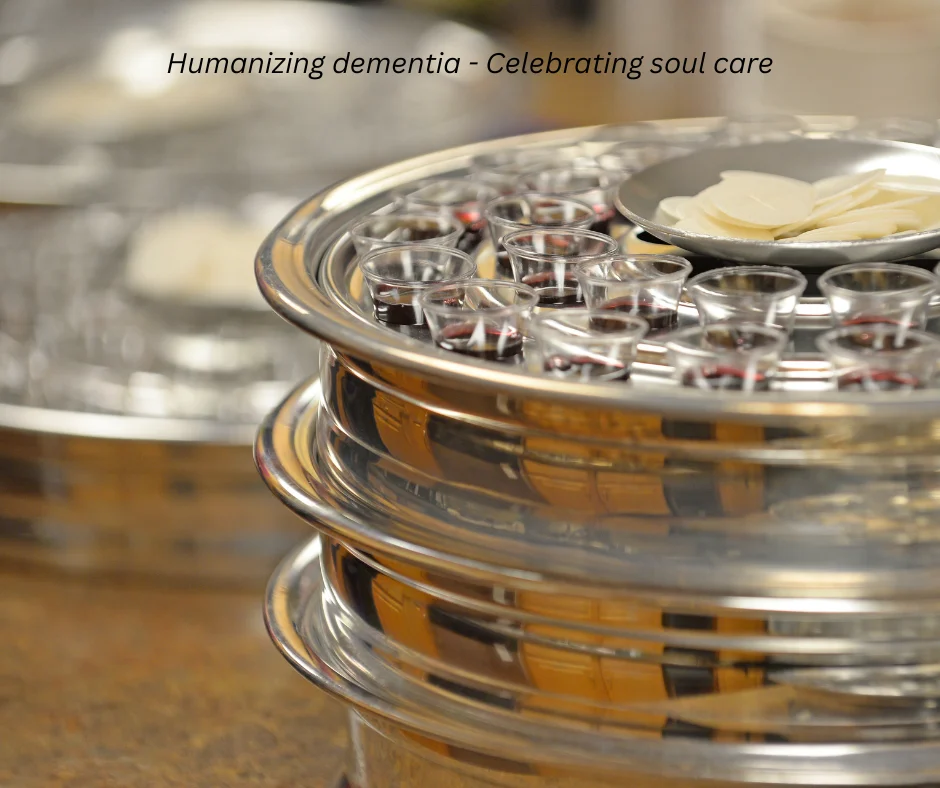
Cousins drying communion cups
Another early memory was being present with some of my cousins to help dry the communion cups in Grandma’s kitchen following the Sunday evening communion service.
Aunt Dorothy – capable of so many things! – was the one to direct us in this “special operation.”
Grandma’s agile response
In recent years when I shared the following anecdote with my 96-year-old uncle (Grandma’s only surviving child and only son) he agreed with me that it did not sound like Grandma’s typical response. This time, it was still her gold standard – The Golden Rule – but with a humorous contrariety.
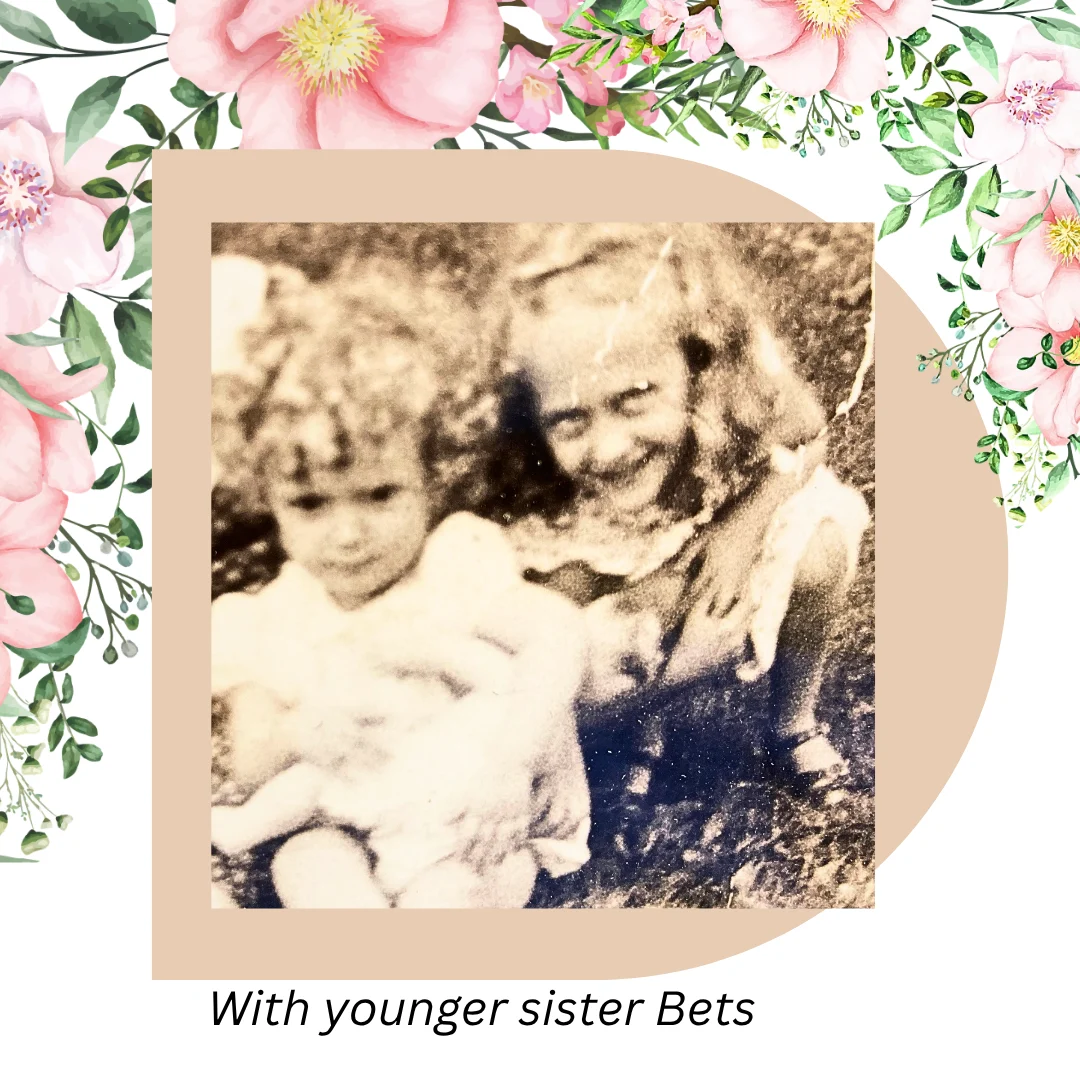 I was 10 years of age. I arrived at her house deflated and told her what had happened. How could someone older and more experienced than me be gleeful that I had misspelled a single word in an essay that I was writing? Taunting me because I made a mistake?!? My 10-year-old-emotional reflection was that it felt overly-oppressive considering the magnitude of the error.
I put my composition book, pencil, and large pink eraser down on her table – as though I would not be writing again soon.
Without a moment’s hesitation, Grandma said: “You keep writing.” I did not have language for it then, but perhaps it was my first lesson in moral imagination.
It was not merely advice about criticism. It was a way of standing – of being in the world. Introducing imagination into the wound itself, she shifted the emotional terrain. And that is precisely the territory of moral imagination: the ability to respond to injury without surrendering dignity.
“You write a letter thanking her for pointing out your mistake. But…” she directed, “misspell every other word.”
That was it. She turned to take the fresh-baked rolls out of her oven. And I reached for my composition book. 
Well, it turned out that the letter was, indeed, quite humorous, and well-received. When I shared it with family members at the table that evening, everyone had a good laugh. So, I couldn’t help but give attribution to the proper source.
“It was Grandma’s idea,” I said quietly.
Her wit and creativity under pressure did not deny the pain. It was a moment of special inheritance which carried unusual depth.
Grandma’s quick reply causes me to wonder what prompted her agility in dealing with this event – an important turning point for her 10-year-old granddaughter. Did she wish that someone had suggested to her to write a humorous letter which might have changed the course of her life – as she was ready to pursue her dreams in college? … But, who, instead, unpacked her bags and stayed home when being admonished for leaving…?
Looking back, I can only imagine that she would have experienced some deep regret about giving up her dream to pursue baccalaureate studies at Goshen.
The moment feels almost like a parable to me — a small story that carried more meaning as the years passed.
The memory keeps unfolding.
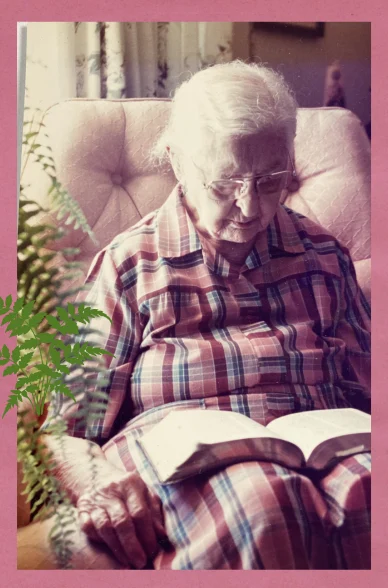
Photo by Suzanne Bishop
Grandma – a life-long student who never stopped studying
In her later years, she was still reading church publications, newspapers, and Farmers’ Almanac – while also enjoying cartoons.
And in the final 11 years of her life, she read the Bible in its entirety – every year for 11 years. This information was confirmed with my Aunt Dorothy Yordy who lived with her… and confirmed again more recently by my 96-year-old Uncle Maurice Yordy.
From what I know about her, she never spoke a contentious word to anyone.
She lived to be 100 and at the time of her death was still gardening. The seeds for her spring garden were in her chest of drawers and a new pink dress was in her closet.
My grandmother’s theology – impacting the generations who follow
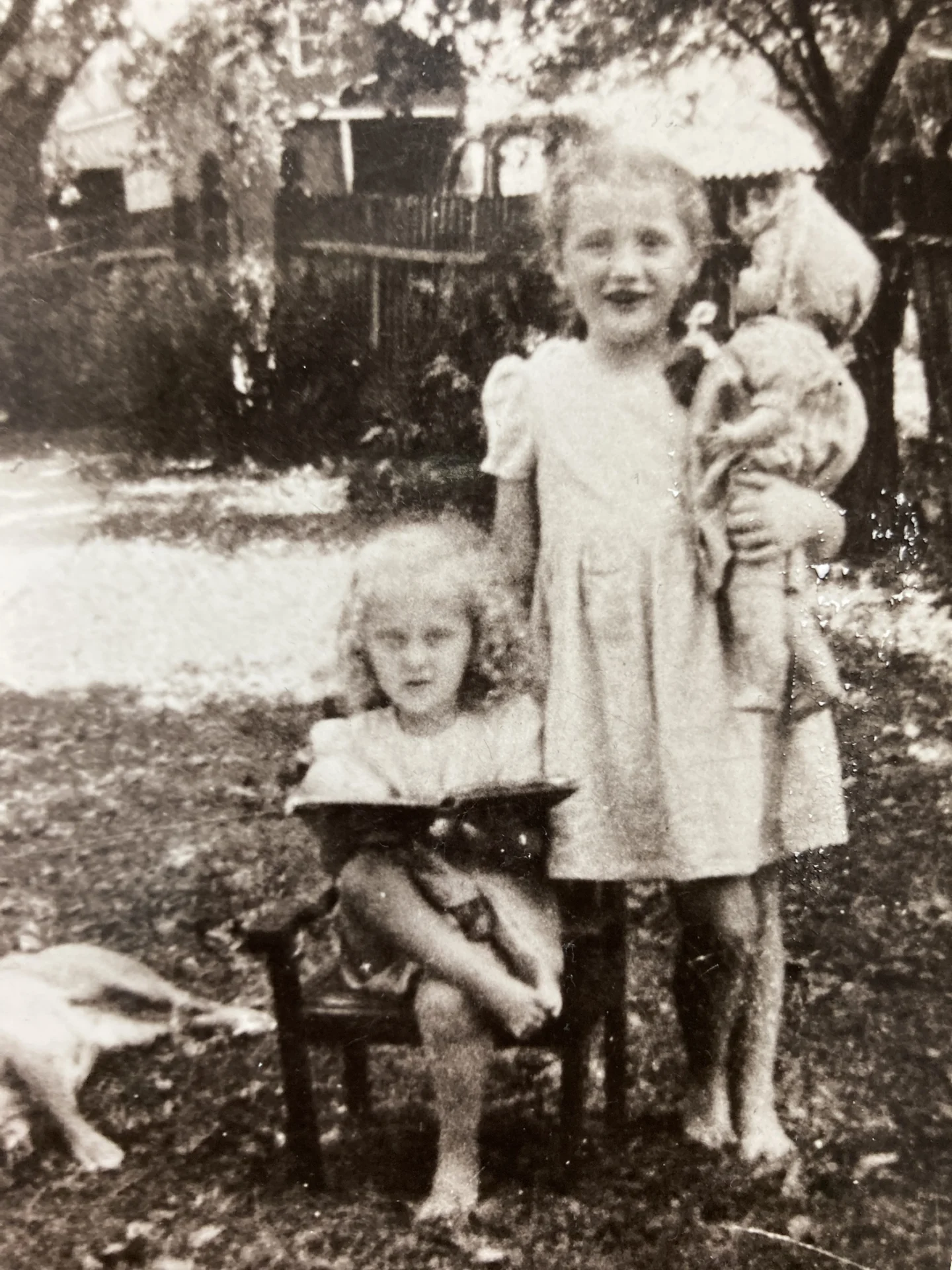
With Mary Ann, my older sister
The value of intergenerational relationships is currently being discovered, it seems, as though for the first time. In so many ways, my grandparents were significant in enriching my early years. I can still feel that sense of security, comfort, and calm which I felt when entering their home – feelings which can never be taken away. I can put myself back into that memory and I am there.
My grandmother’s theology held great potential to influence the generations who have followed. Thinking about it retrospectively, I would rank the wisdom in her reply to me as prodigious.
What a different world it would be if every child had a grandmother to model wisdom during important developmental years!
About Grandma’s parable, the belief which she transmitted to me was, “You will make mistakes. Don’t be distracted.” More importantly, she conveyed the value of maintaining one’s self-respect, even when others might criticize the outcome of one’s work.
Ethel Yordy Troyer – demonstrating faith, courage, simple elegance, and quiet perseverance following a diagnosis of Alzheimer’s
Her lyrical laughter, sense of humor, independence – and her grace and elegance continued during the years following her diagnosis. She never ceased to inspire me. Never.
Still Miss Ethel
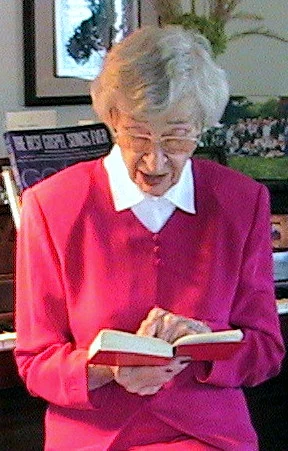
2006 – nine years following her diagnosis of Alzheimer’s
A favorite dream found in my dream journal is one in which I am hang-gliding with my mother – the athlete and adventurer who had always been ready to try most any new venture. The place? A cliff over the ocean in California. It was a recurring dream in the years prior to my becoming her primary caregiver.
Yes – it was only a dream, but it helps to capture the spirit of our relationship following her diagnosis of Alzheimer’s.
Following the diagnosis, we shattered the silence of stigma surrounding Alzheimer’s and dementia by creating daily, non-stop moments of joy through music and other real life pleasures – and kept on living!
Those moments were filled with the rich experience of meshing my voice with her beautiful voice… of being surrounded by the beauty of the four seasons… and the eventual peaceful passing of both parents. This experience of losing both parents (2005 and 2011) felt like a very natural occurrence, since I had witnessed, first-hand, the progression of their condition. This rite of passage covered a span of 14 years.
The embodiment of joy
She seemed to have joy in her DNA. And she never outgrew her college giggle – so long as she was in an environment where she felt safe and secure. The critical key was HER perception of an environment where she felt safe and secure. All we had to do was observe – while putting ourselves into her shoes – to understand when she did not feel secure.
And speaking of college laughter…? In her final weeks, as she lay in her bed with eyes closed, I quietly said the names of her college friends: Mae Orendorff Imhoff… Miriam Sieber Lind… Shirley Holloway Troyer… and others! At the mention of each name, she nodded her head and smiled gently in recognition. To me, her response indicated that the memory of each friend was still there. It just needed help in being “recalled.”
How lovely it was to care for her…! Barbara Hostetler, a caregiver who was with us for a full 10 years, stated within the final three days, “I could take care of her forever.” The three of us were a team in this sacred experience – feeling as though we walked on sacred ground together.
Dr. Kantha Ruban, MD, has recently revealed a statement in a LinkedIn post which could serve as an accurate description of both of my parents.
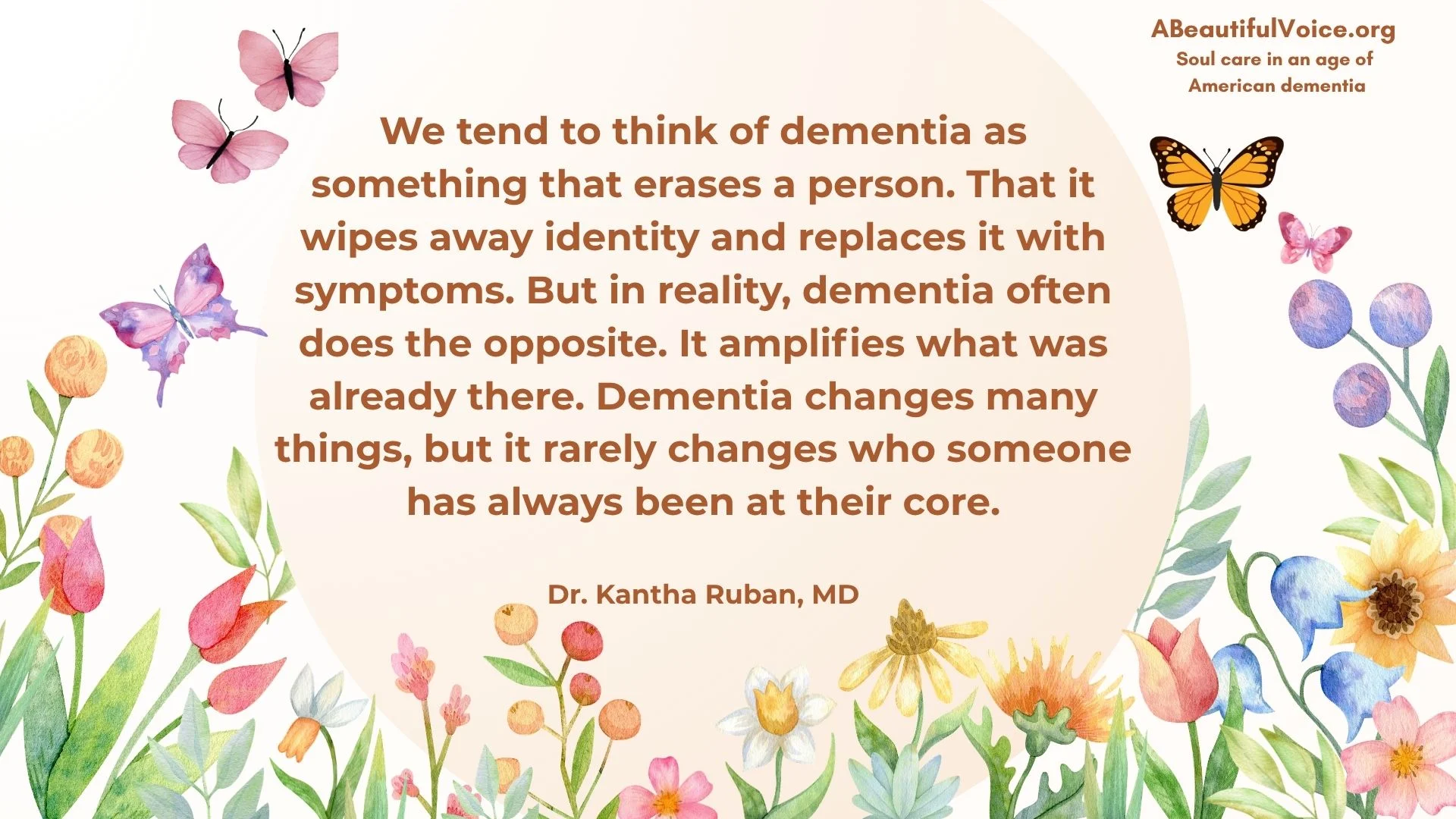
To amplify the goodness that was already there – as Dr. Ruban suggests – I arrived in my hometown with the mantra, “It’s about dignity.”
At the Ranch…
- my parents would have a seat with dignity not only at their table – but also every day at the piano.
- we would be nourished by nutritious food – plants, not pills.
- we built an environment of wellness, not warehousing – a term which was being used by the media in our early days together.
- soul care was integrated into everything we did.
Quietly, I was the guide on the side. Not the sage on the stage.
I arrived filled with curiosity and asking questions. Essentially nothing could be found online regarding our “alternative” approach. In 1998, the internet was new and Google had not yet joined the search engines.
Today, however, the internet abounds with what is called “preventive.” Word is beginning to trickle down that there is no pharmaceutical “cure.” While a “cure” was never our goal, quality of life was!
With patience in all things, we experienced a good quality of life together.
Our website, a tribute to both parents, emerged two decades later (2020).
The message of my parents’ voices?
“Dementia justice.” I believe it would be “Dementia justice. Dignity. Respect.” As a child, I often witnessed my father, a community leader, standing up for marginalized and disenfranchised people.
About their own status, they knew… They understood:
- when major life decisions being made for them were not in their best interest.
- when their previously-made agreements were being retracted.
- when their dignity was being compromised.
In so many ways, we came face to face with the brokenness of the healthcare system. Being their ombudsman was to swim upstream against the current.
Would it have unfolded as it did without my grandmother’s wisdom which urged me onward so many decades earlier?
Her influence was not merely instructional. It was formative. My grandmother helped to shape my inner response to human difficulty – while my mother embodied endurance and resilience across a lifetime.
Together, they became part of the moral and emotional lineage supporting the perseverance, the passion, and the message of ABeautifulVoice.org.
And still, despite obstacles that continue to impede progress today, we will continue the development of the magazine called “A Beautiful Voice” – with the spirit of my mother:
Now go. Press on. Keep flying!
Where attention goes, care begins.
365 Ways to Say I Care | ABeautifulVoice.org
By Susan Troyer
Founder / Author, ABeautifulVoice.org 🌿
Leave A Comment