
Editor’s Note:
This article begins a three-part series examining the human and global consequences of our reliance on pharmaceuticals.
Part One begins inside one family—with a medication that was intended to help my mother but instead placed her life at risk. Part Two turns to the work of Riane Eisler and asks what a Caring Economy, Partnerism, and more humane systems might make possible. Part Three extends the inquiry globally, examining what happens when America exports not only its pharmaceuticals, but also a system of care built around dependence upon them—often into communities that may already possess more humane, culturally rooted traditions of healing and care.
Together, the three pieces move from personal experience to systemic responsibility—and, ultimately, toward the question that matters most: What would we build differently if human well-being, rather than profit were placed at the center?

The first time I realized Alzheimer’s research had failed my family, I was using a medicine dropper to get liquids into my mother’s mouth. She had not eaten or drunk anything for five days following a 13-month period of nausea. My father had called me, desperate. The prescribed drug — Aricept, the most common Alzheimer’s treatment on the market — was supposed to help her. Instead, it was starving her to death.
When I reached out on my first sibling call with an update that the nausea had completely subsided and the doctor had agreed to discontinue Aricept, I expected to hear relief. A “hallelujah” moment – a moment of celebration. To my dismay, the response was not anticipated: “Well, I don’t know that I am ready to stop Aricept. It’s the state-of-the-art medication.” It was thirteen months following the initial prescription.
I was new on the scene, and I shall never forget that moment. The inability to see what was happening directly in front of us—the continued trust in the medication despite Mother’s visible decline due to nausea—was the real blind spot.
My mother’s experience was not caused by the amyloid research scandal explored in this article. But it arose from the same culture of unquestioned authority which continued into the late 90’s—a system in which families were encouraged to trust the prescription, the physician, and the prevailing science—even when lived experience was sounding an alarm.
For too long, families like mine have trusted that the science behind Alzheimer’s treatments was solid. We were wrong. And it is time we understand what happened — beginning in the 1970s and 1980s — and how big pharma has affected the most vulnerable people in society.
A Culture of Dominance Rather than Partnership – The Theory That Took Over
For more than 30 years, the amyloid hypothesis dominated Alzheimer’s research. The idea was simple: amyloid beta plaques build up in the brain, and those plaques cause the disease. Remove the plaques, cure the disease.
It was a beautiful theory. It was also, as neuroscientist Karl Herrup argues in his 2021 book How Not to Study a Disease, a catastrophic oversimplification. Herrup makes the case that an overemphasis on amyloid has stymied progress on Alzheimer’s for decades. The amyloid hypothesis became a dominant paradigm that crowded out alternative research. Scientists who questioned it were marginalized. Funding was directed toward amyloid-focused studies. The entire field narrowed to a single, unproven idea.
And here is what that narrowness produced: thousands of clinical trials designed to remove amyloid. For decades, every single one of them failed to stop or reverse the disease. Recently, drugs like lecanemab have shown modest effects, but the fundamental theory remains unproven. The amyloid hypothesis had been running on faith, not evidence. But the faith was so deeply entrenched that no one seemed to notice when the evidence never materialized.
The Fraud Beneath the Foundation
In 2006, a paper published in Nature claimed to have found the toxic culprit: a specific aggregate of amyloid beta called Abeta*56. It was exactly what the field had been waiting for — the smoking gun that would finally prove the amyloid hypothesis was correct.
Other scientists were immediately skeptical. They couldn’t reproduce the findings. But the paper was celebrated anyway. It became a cornerstone of the amyloid hypothesis, cited thousands of times.
Now we know why it couldn’t be reproduced. The figures were altered. The data was manipulated.
Investigative journalist Charles Piller spent years exposing what he calls the “amyloid mafia” — a powerful cabal that controls Alzheimer’s research by prioritizing novelty over replication and marginalizing dissenters. His book Doctored reveals the full scope of the fraud: the now-retracted 2006 Nature paper, the manipulated data from “Cassava Biosciences,” the problematic papers that underpin more than 200 patents held by multiple companies.
The key whistleblower who helped expose it all is Matthew Schrag, MD at Vanderbilt. Along with a network of “science sleuths” — Elisabeth Bik, David Bimler, Sholto David, Mu Yang, and Leonid Schneider — Schrag analyzed numerous Alzheimer’s research papers and found manipulated images implicating dozens of high-profile researchers.
What makes Schrag’s whistleblowing even more remarkable is that the fraud implicated his own professor and mentor. His career could have been destroyed. He blew the whistle anyway.
Billions in research funding wasted. Careers built on false premises. Patients subjected to ineffective or harmful treatments. And the FDA repeatedly approved dubious Alzheimer’s treatments despite expert recommendations.
“It can no longer be claimed that misconduct and fraud in biomedical research are rare events or that those who engage in these activities are merely a few ‘bad apples,'” the reviewer of Doctored writes.
This is not about a few bad scientists. This is about a system that failed.
What This Means for Families
My mother was prescribed Aricept because a doctor trusted the science. The doctor trusted the system. The system was broken.
She survived. Many were not so lucky.
I think about what happened in those early months. My father had returned with Mother to see the doctor many times due to her nausea. They returned so often, according to an observant employee, that they became caricatures — another cause for grief regarding their experience — after living lives of dignity and respect in the community.
In small towns, news travels fast via the grapevine. An aunt called me in Chicago to alert me to this news of my parents’ frequent visits to the medical office building following her Sunday lunch earlier that day. It helped prepare me for my father’s call which followed shortly.
When we finally stopped the Aricept and turned our attention to real food, my mother flourished. Between January and April, she regained 17 pounds, returning to her original weight. Once the medication was discontinued, her body began to recover and her hearty appetite returned.
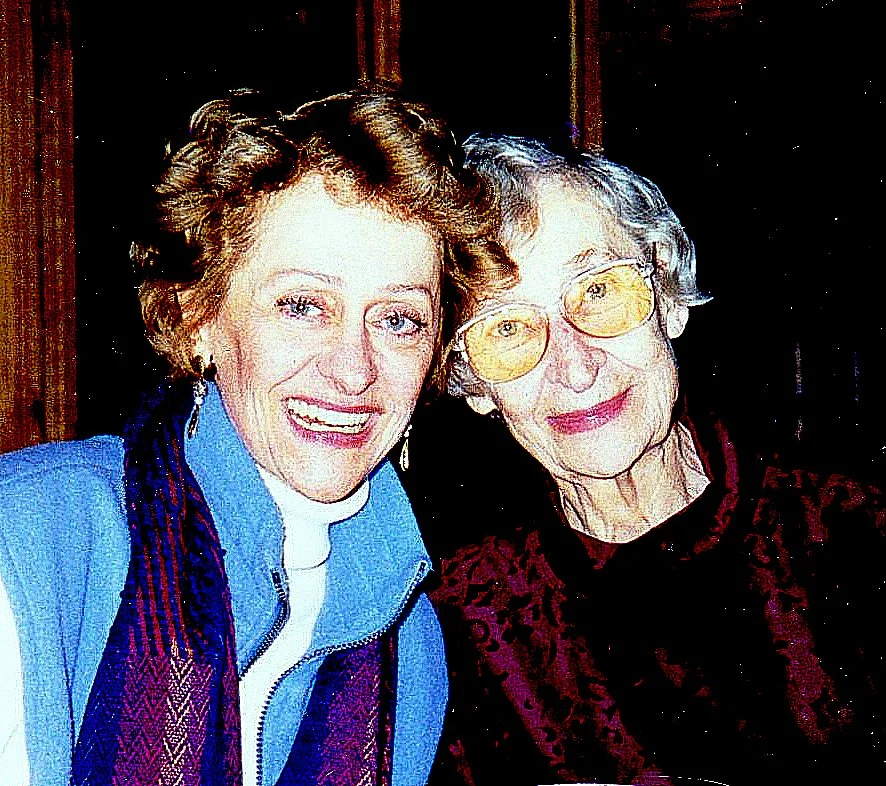
Late December 1998: two weeks after Aricept cessation, this was a family outing to a favorite restaurant. She had immediately reclaimed her appetite.
In subsequent months following my arrival, I began to read the fine print of the four-color, full-page Aricept ads in magazines, e.g., Time Magazine, that this medication could cause anorexia. Why didn’t the doctor identify this at the beginning when Mother began to experience nausea? Instead, the prescribing continued.
The greed behind these drugs does more than create side effects like nausea and compromised quality of life. It tears families apart. Two of my siblings had been seeing Mother weekly in separate visits in my hometown during the 13-month period since diagnosis. They had been conditioned to trust the system. But the system failed due to the over-reliance on the prescription by the primary physician … to say nothing of the lack of attention to my father’s repeated attempts to seek resolution for the relentless nausea!
If This Was Our Family, How Many Others…?
Families trust that the science behind these drugs is solid. They don’t know that the foundation is cracked. They don’t know that the treatments they are being offered are built on theories that have never been proven, supported by data that was sometimes fabricated, and approved by a regulatory agency that has repeatedly failed to protect patients.
According to the book American Dementia, big pharma’s Alzheimer’s drug failure rate through the 21st century stands at 99.9 percent. That is not a failure rate. That is a systemic collapse. And yet, we keep asking families to pay the price — financially, physically, and in silence.
The human cost is staggering. Alzheimer’s disease and other dementias are estimated to cost the world economy $14.5 trillion over the next 30 years — unless new, effective therapies are introduced. But effective therapies will never emerge from a system that has spent decades chasing a single, unproven theory while suppressing dissent and manipulating data.
What the Evidence Actually Shows
Its recognized side effects include nausea, vomiting, loss of appetite, anorexia, and weight loss. Safety concerns are well-documented. And yet, the pills keep getting pushed.
In December 2018, Dr. David Perlmutter broadcast to his email subscribers the results of a landmark meta-analysis published in the Journal of the American Geriatrics Society. The study reviewed over 140 clinical trials and concluded that cognitive enhancers like Aricept yield “minimal effects on cognition” while carrying significant risks of gastrointestinal side effects.
For my family, that confirmation came years too late. But it validated what we had learned the hard way: the drug was not helping. It was harming.
Dr. Perlmutter, a board-certified neurologist, has long cited these findings to argue that prescription drugs offer little benefit compared to the significant side effects they produce. Instead, he champions lifestyle interventions — diet, exercise, and metabolic health — as the primary defense for brain health and dementia prevention.
This article — about where we are coming from — serves as a transition piece toward integrative medicine, asking questions, and embracing lifestyle rather than reliance on big pharma.
Meanwhile, there is hope.
A New Way Forward
In April 2026, a study published in PNAS Nexus by researchers at the University of California, Riverside, offered a new theory of Alzheimer’s disease — one that finally makes sense of the evidence.
The study, led by chemist Ryan Julian, suggests that Alzheimer’s may not be driven primarily by amyloid plaques at all. Instead, the disease may result from a subtle but critical competition inside neurons: amyloid beta competing with tau for binding sites on microtubules, which are the transport routes inside cells.
Here is how it works. Tau stabilizes microtubules, keeping them healthy and functional. When amyloid beta builds up inside neurons, it competes with tau for the same binding sites. Amyloid beta displaces tau, disrupting the cell’s internal transport system. Without that transport system, neurons cannot deliver the materials needed for survival and communication. The cell begins to fail.
This explains why thousands of clinical trials designed to remove amyloid failed. Plaques outside cells — the ones targeted by those drugs — may be a consequence of the disease, not the cause. The real problem is happening inside the cell, where amyloid beta is interfering with tau’s ability to do its job.
The study also aligns with what we know about aging. The brain’s protein clearance system — autophagy — slows with age. When that happens, amyloid beta accumulates and begins to compete with tau. This suggests that strengthening microtubules or improving the cell’s ability to clear amyloid beta could be more effective treatment strategies than removing plaques.
This theory brings together many previously disconnected findings. It offers a clearer picture of what may be going wrong inside neurons — and where new treatments might start.
What Caregivers Deserve
Caregivers deserve the truth. We deserve to know that the system failed us. We deserve to know that the science we trusted was compromised. We deserve to know that the treatments we were offered were built on shaky foundations.
But we also deserve to know that there is hope. That researchers like Matthew Schrag are working to expose the truth. That new science is emerging. That asking questions and embracing lifestyle changes — rather than blindly trusting pills — is a path forward.
We deserve honesty about what happened. And we deserve accountability.
This is not just a scientific scandal. It is a betrayal of trust — a betrayal of every family that ever trusted the system and every caregiver who watched a loved one decline while the research establishment chased a theory that had never been proven.
My mother survived Aricept. Many were not so lucky. Somewhere tonight, a family is trusting the system — believing that the science is solid, that the treatments are tested, that someone is watching out for them.
They deserve better. We all do.
This film, The Constant Gardener, explores the similarities my father experienced with a medication he was prescribed — another reminder that these failures are not isolated.
Sources
- Karl Herrup, How Not to Study a Disease: The Story of Alzheimer’s (MIT Press, 2021) — Review in Science
- R. Scott Turner, PhD, MD, “Allegations of fraud in Alzheimer’s disease research.” Georgetown University Memory Disorders Program
- 2018 AMA/AGS Meta-Analysis: “Comparative Effectiveness and Safety of Cognitive Enhancers for Treating Alzheimer’s Disease.” Journal of the American Geriatrics Society
- Dr. David Perlmutter, The Right Treatment for Alzheimer’s Disease
- Charles Piller, Doctored: Fraud, Arrogance, and Tragedy in the Quest to Cure Alzheimer’s. Reviewed in GeroScience
- Matthew Schrag whistleblower reporting, Science
- Shoff TA, Derbez-Morin M, Cai P, Julian RR. “The microtubule nexus linking amyloid beta and tau: A simple and unifying theory for the underlying cause of Alzheimer’s disease.” PNAS Nexus, March 17, 2026
- UC Riverside news release on the April 2026 study
- The global macroeconomic burden of Alzheimer’s disease — $14.5 trillion cost estimate
- Daniel George and Peter Whitehouse, American Dementia (2021)
- Donepezil safety concerns — PMC

Leave A Comment